Skip to content

How to Conceal a Mini-Split in a Palm Springs Home (Without Hurting Performance)

home hvac

In an area full of mid-century-modern homes, a bulky white air handler on a clean plaster wall or a condenser parked beside a breeze-block screen is the one detail that can stand out for all the wrong reasons. The good news: you can conceal almost every part of a mini-split system. The catch most online guides skip is that hiding it the wrong way chokes airflow, raises head pressure in 110-degree heat, and can void your warranty. Below is how we conceal mini-splits inside and outside real Coachella Valley homes.

Can you hide a mini-split without affecting how it works?

Yes, you can conceal a mini-split as long as you protect airflow and service access. The indoor air handler needs clear space to pull in and throw air, and the outdoor condenser needs open clearance to reject heat. Block either one and the system runs hotter, costs more to operate, and fails sooner. Concealment is a design problem with hard mechanical limits.

That distinction matters more in the desert than almost anywhere else. When outdoor temperatures sit above 110 degrees, the condenser is already working at the top of its range. A decorative enclosure that looks great in a Portland backyard can trap heat against the coil here and push the system into a high-pressure shutdown. Every concealment choice in this guide is built around keeping the equipment breathing.

How to conceal the outdoor condenser in desert heat

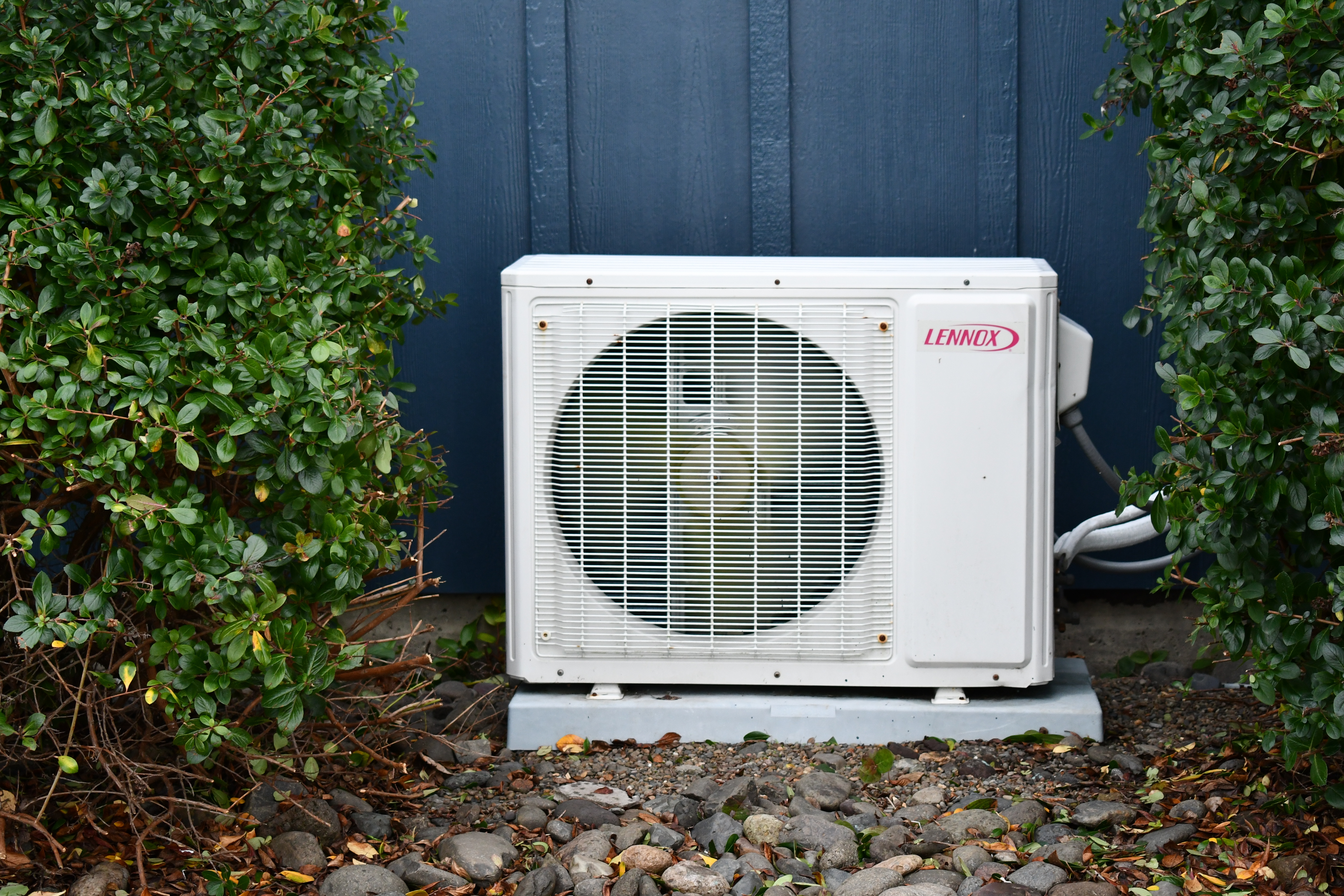
Conceal the outdoor condenser with an open, vented screen that keeps the manufacturer’s required clearances and never traps heat against the coil. The goal is to break the unit’s sightline, not to box it in. Air has to move freely through the coil and exhaust up and out, or the system loses capacity exactly when you need it most.

Blair Heating & Air installs and services ductless systems across Palm Springs, Cathedral City, Rancho Mirage, Palm Desert, La Quinta, and Indio, and the same rule holds on every job: airflow always wins over aesthetics.

Slatted screens, breeze block, and louvered enclosures

Slatted wood screens, powder-coated aluminum louvers, and classic breeze block all hide a condenser while letting air pass through. These materials also happen to be common in desert-modern design, so a vented screen can look intentional instead of like a cover-up. Choose open patterns over solid panels. A breeze-block wall with real gaps moves far more air than a sealed stucco box, and it reads as architecture rather than an afterthought.

Keep the screen freestanding rather than wrapping it tight to the unit. Leave the top open so hot exhaust air rises and escapes instead of recirculating back through the coil.

Landscaping that survives the Coachella Valley

Desert-tolerant planting can soften an outdoor unit, but the plant choices that work here are not the dense hedges generic guides recommend. Use ocotillo, feathery palo verde, clumping bamboo set well back, or ornamental grasses that screen the view without dropping heavy debris into the coil. Avoid anything that sheds constantly or needs frequent trimming right against the equipment.

Plant for the mature size, not the nursery size. A shrub that looks fine at planting can crowd the unit in two seasons, and roots and irrigation lines near a condenser pad cause their own problems.

Clearances Blair won’t go below

We keep at least 12 inches of clear space on the sides of a condenser, a minimum of 24 inches in front of the fan discharge, and nothing solid overhead within the manufacturer’s stated distance. Those are field minimums, and we open them up further on west- and south-facing walls that bake all afternoon. If a screen design forces us under those numbers, we redesign the screen.

How to conceal the indoor air handler

Conceal an indoor air handler by recessing or framing it so it blends into the wall while keeping the intake and discharge fully open. Wall-mounted heads need clear space below to throw air across the room and clear space above and around the top grille to pull return air in. Surround the unit, but never cap it.

Built-in cabinetry and recessed niches

A recessed wall niche or a custom built-in can turn a white plastic head into a clean architectural feature. The unit sits in a framed reveal that matches the wall, with the cabinetry stopping short of the air intake and discharge. Leave a removable panel or open face so a technician can reach the filters, blower wheel, and drain. We have seen beautiful built-ins that sealed the unit in so tightly the only way to service it was to demo the cabinet.

Mid-century-modern integration (post-and-beam, clerestory lines)

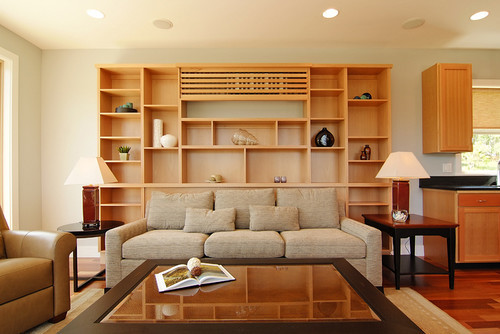
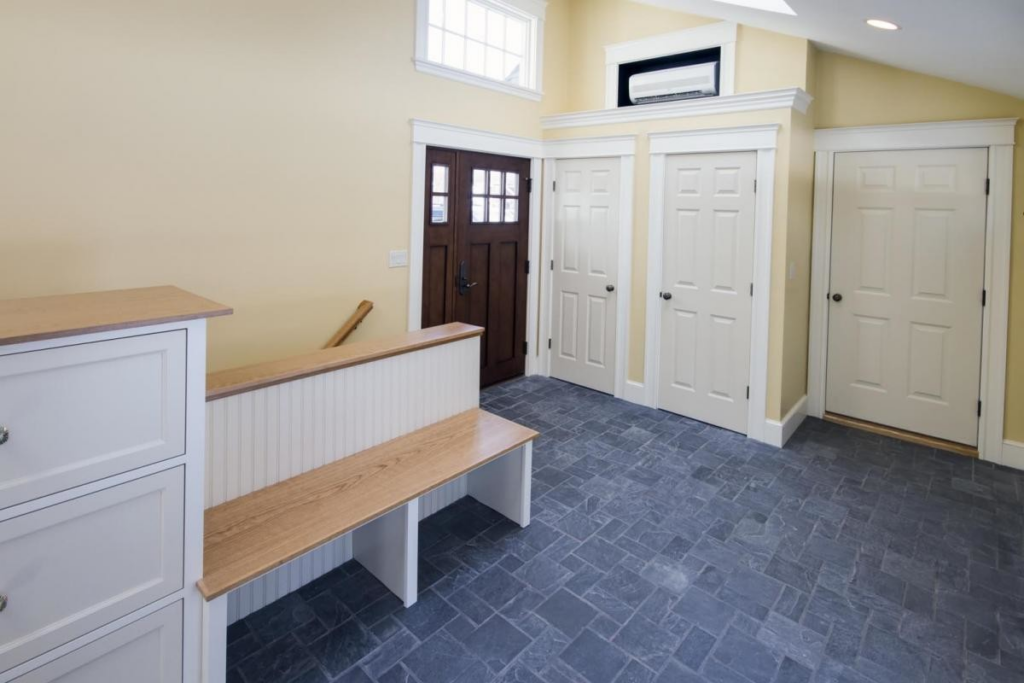
In a post-and-beam or mid-century-modern home, place and frame the head so it follows the architecture instead of fighting it. Align the top of the unit with a clerestory window line or a beam, tuck it into the plane above built-in shelving, or recess it into a feature wall so it reads as part of the design grid. Palm Springs homeowners care about these sightlines, and aligning the equipment to them is what separates a concealed install from a hidden one. Where exposed structure makes recessing impossible, a low-profile or slim-duct concealed-ducted head mounted in a soffit can remove the wall unit from view entirely.

Photo courtesy of Hood River reDesign

Photo by Steve Baczek

Concealing line sets and exposed conduit

Hide the refrigerant line set with a paintable line-set cover (a linehide channel) run along clean architectural edges, then painted to match the wall or trim. Bare copper and foam tape running down an exterior wall is usually the most visible part of a mini-split, and it is also the easiest to fix. A rigid PVC cover snaps over the lines, follows corners with matching fittings, and takes exterior paint well.

Plan the route before installation. Running the line set along a roofline, down an inside corner, or behind a downspout keeps it out of the main sightline. On the interior, the same covers can follow baseboards or door casings where a wall penetration is unavoidable.

HOA and Palm Springs historic-district rules to check first

Check your HOA rules and any historic-district designation before you build a screen or move equipment, because Palm Springs regulates exterior changes more tightly than most cities. Several neighborhoods sit in Class 1 historic districts, and many gated communities have architectural committees that must approve exterior screens, walls, and equipment relocations. A breeze-block enclosure or a relocated condenser can count as an exterior modification that needs sign-off.

This is the step national listicles never mention, and it is the one that causes the most expensive surprises. We have had homeowners build a screen wall only to be told to modify it after the fact. Confirm setback rules, height limits, and approval requirements first, then design the concealment to fit them. If you are planning concealment as part of a remodel or new build, our team handles this on mid-century modern HVAC design projects throughout the valley.

Frequently Asked Questions

Can you box in a mini-split condenser?

You can enclose a condenser, but only with a vented, open structure that keeps the manufacturer’s clearances. Blair Heating & Air keeps at least 12 inches on the sides and 24 inches in front of the fan discharge, with the top left open. A sealed box traps heat against the coil and causes high-pressure faults, especially above 110 degrees.

Does hiding a mini-split reduce its efficiency?

Concealing a mini-split does not reduce efficiency if airflow and clearances are preserved. Efficiency only drops when a screen, cabinet, or planting blocks the coil intake or the fan discharge. Open louvered screens and recessed indoor niches that leave the grilles clear have no measurable effect on performance.

How much clearance does a mini-split condenser need in the desert?

Most manufacturers call for 12 inches of side clearance and 24 or more inches in front of the discharge, with overhead space kept clear. In the Coachella Valley, Blair Heating & Air opens those numbers up further on west- and south-facing walls because afternoon sun adds heat load the published minimums do not account for.

Can I paint my mini-split to match the wall?

You can paint the line-set cover and exterior conduit to match your wall or trim, and that hides the most visible part of the system. Do not paint the indoor unit’s grilles, the coil, or the outdoor fan housing, because paint restricts airflow and can interfere with heat transfer and service.

Do I need HOA approval to screen my outdoor unit in Palm Springs?

Often, yes. Many Palm Springs HOAs and historic-district properties treat exterior screens, walls, and equipment relocations as modifications that require architectural-committee approval. Confirm your community’s setback, height, and approval rules before building anything, then design the screen to comply.

Conceal your mini-split the right way with Blair Heating & Air

Blair Heating & Air designs and installs ductless mini-split systems that disappear into your home without giving up performance, from the screen around the condenser to the way the indoor head sits on the wall. We have served Palm Springs, Indio, and the greater Coachella Valley for over 15 years, and we know how desert heat and local design standards shape what actually works. If you want a mini-split that fits your home and keeps its cool through July, call our Palm Springs office at (760) 537-1120, our Indio office at (760) 330-7923, or request service online. Ask us about ductless mini-split installation and concealment options for your space.

Share