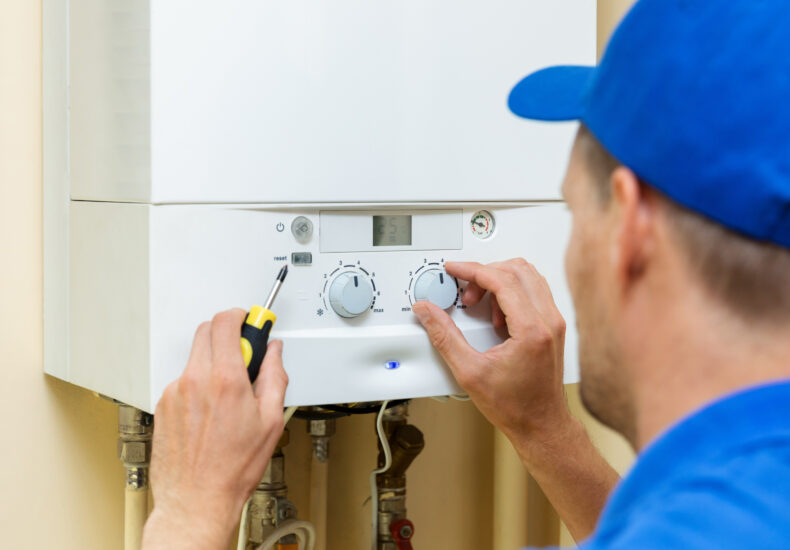
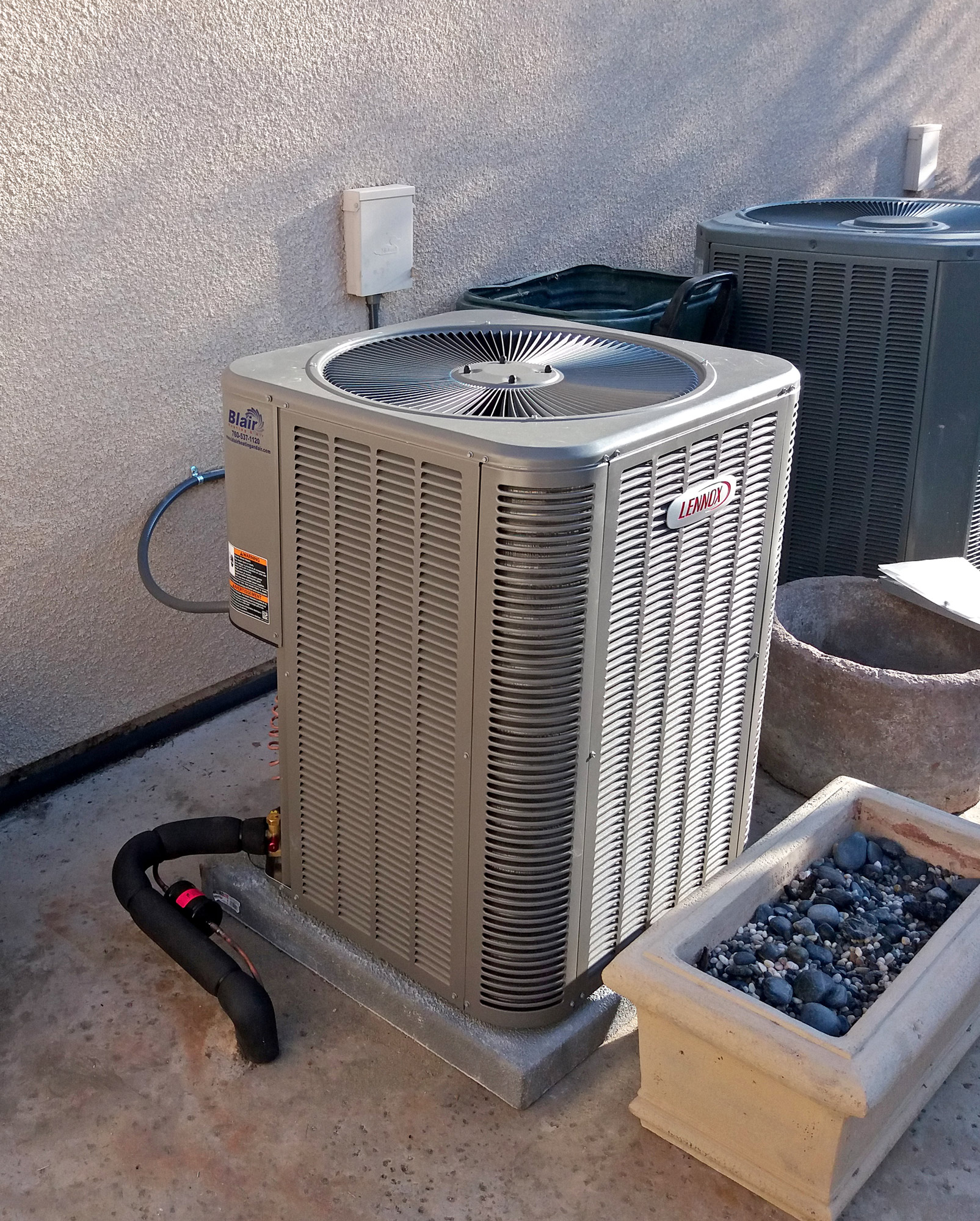
Most heating calls we run in Palm Springs are not emergencies. They are a dead thermostat battery, a clogged filter, a dirty flame sensor, or a tripped breaker on a system that sat untouched since March. This guide walks through the symptoms in the order homeowners actually encounter them, tells you what is safe to check yourself, and flags the situations where you should stop and call a licensed technician.
Your heater will not turn on at all
Start with the three things that account for most no-heat calls before assuming the worst.
- Thermostat. Confirm it is set to Heat and the target temperature is above the current room temperature. Replace the batteries even if the screen looks normal. If the screen is blank entirely, our guide to a blank thermostat screen walks through the causes.
- Power. Check the breaker panel for a tripped breaker, and look for the furnace service switch, which looks like a light switch near the unit and gets flipped off by accident more often than you would think.
- Gas supply. Make sure the gas valve is open. If you smell gas at any point, stop, leave the house, and call from outside. Do not troubleshoot a gas smell.
If power and gas are fine and the system still will not start, the likely culprits are the ignitor, the flame sensor, or the control board. Those are technician territory.
The system runs but the house still feels cold
When the blower is moving air but the air is not warm, work through these in order.
- Air filter. A filter loaded with desert dust restricts airflow enough to drop heat output noticeably. If you cannot remember the last change, change it.
- Thermostat calibration. A thermostat reading several degrees off will satisfy itself before the house is comfortable.
- Burners or heat exchanger. Dirty burners produce weak, inconsistent heat. This requires an inspection, and it is worth doing promptly because burner and heat exchanger issues carry a safety dimension.
Weak or lukewarm airflow
- Blocked vents and registers. Furniture, rugs, and closed doors starve the system. Walk the house and open everything up.
- Duct leaks. Leaky ducts in an unconditioned attic dump heated air where nobody benefits from it. Sealing them improves both comfort and your bill.
- Blower motor or capacitor. A failing blower is a diagnosis, not a DIY fix.
The heater turns on and off constantly
Short cycling wears equipment out fast and usually traces back to one of three things.
- A dirty flame sensor. This is the most common cause we find, and a cleaning often resolves it entirely.
- Restricted airflow. Same filter and vent checks as above. A system that cannot breathe will overheat and shut itself down on the limit switch.
- Thermostat placement. A thermostat in direct sun, above a heat source, or in a drafty hallway reads the house wrong and cycles the system unnecessarily.
Noises and smells worth paying attention to
Some sounds are normal. These are not.
- Squealing or whining. Belt or motor wear.
- Banging or popping at startup. Often duct expansion, but delayed ignition also produces a bang, and that one needs attention.
- Rumbling. Possible combustion problem. Shut the system down and call.
- Burnt dust on first startup. Normal after months idle. It should fade within an hour.
- Musty odors. Moisture or microbial growth somewhere in the system.
- Any gas or chemical smell. Treat as urgent. Shut it down and get out.
Common heating problems in Palm Springs at a glance
| Problem | Likely cause | What you can check | When to call us |
|---|---|---|---|
| Weak airflow | Clogged filter, blocked vents, failing blower | Replace filter, clear vents and registers | Blower noise, or no improvement after a filter change |
| Uneven heating | Thermostat calibration, duct leaks | Compare thermostat reading to a separate thermometer | Cold rooms persist after basic checks |
| Strange noises | Loose parts, motor wear, ignition delay | Check for loose panels and clear debris around the unit | Banging at startup, rumbling, or persistent squealing |
| Short cycling | Dirty flame sensor, restricted airflow, thermostat location | Replace filter, verify thermostat is not in sun | Cycling continues after filter and thermostat checks |
| No operation | Thermostat, breaker, ignition failure | Batteries, breaker, service switch, gas valve open | Power and gas are fine but nothing happens |
| Gas smell | Leak | Nothing. Leave the building. | Immediately, from outside the house |
What kind of heating system do you have?
The right fix depends on what is installed, and Palm Springs homes are not uniform.
Gas furnaces are the most common. They burn gas and push warm air through your existing ductwork. They heat quickly, which suits a climate where you need heat for a few hours on a cold morning and not much else. Ignition components are their most frequent failure point.
Heat pumps move heat rather than generate it, and they handle both heating and cooling from a single system. They are an excellent fit for our mild winters, and they are increasingly what we install when a homeowner is replacing both sides at once. See heat pump replacement for how they compare.
Boilers and radiant systems turn up in older and architecturally significant Palm Springs homes, including a fair number of mid-century properties. They deliver even, quiet heat with no forced air, which also means no dust circulation. They need a different service skill set than forced air, and we maintain and repair them through our boiler service.
If you are not certain which you have, a technician can identify it in about a minute.
Do not forget the garage heater
Detached garages, workshops, and casitas around Palm Springs often run their own heaters, and they are the units most likely to be neglected. They sit unused for most of the year in a space that collects dust, and they are the equipment where we most often find pest damage, chewed wiring, and blocked venting.
If you use a garage or workshop heater at all, have it checked on the same visit as the main system. Combustion safety matters more in a garage than almost anywhere else in the house, because these spaces are often poorly ventilated and share walls with living areas.
When repair turns into replacement
Repair is the right call more often than not, particularly here. Palm Springs furnaces log a fraction of the run hours of systems in cold climates, so a unit that looks old on paper may have plenty of life left.
Replacement starts making sense when the heat exchanger fails, when repairs stack up across consecutive seasons, or when the air conditioning side is also aging. Most homes here share one system between heating and cooling, and since the AC does the vast majority of the work, the cooling side usually drives the decision. We break down the numbers, including what individual repairs cost and how to run the repair-or-replace math, in our guide to furnace repair costs. When replacement is the answer, heating installation and replacement covers the options.
Why pre-season maintenance matters more in the desert
A furnace that sits idle from March to November is not resting. It is collecting dust, giving pests somewhere to nest, and letting a film build on the flame sensor. The failures we see on the first cold night are usually the accumulated result of eight quiet months, not of hard use.
A pre-season visit catches those problems in October instead of during the first cold snap, when everyone calls at once. A technician tests safety controls, cleans burners and the flame sensor, checks electrical connections, verifies temperature rise, and confirms the thermostat is reading correctly. Our maintenance plan covers both the heating and cooling sides on a schedule. The furnace tune-up checklist lists what the fall visit includes and what you can check before it.
Heating repair across Palm Springs and the Coachella Valley
Blair Heating & Air provides heating repair, maintenance, and replacement throughout Palm Springs and the surrounding desert communities, with 24-hour emergency service seven days a week. We serve Palm Springs, Cathedral City, Rancho Mirage, Palm Desert, Thousand Palms, Desert Hot Springs, Indian Wells, La Quinta, Indio, and Coachella.
We are a local, licensed HVAC company (CA License #953427) with two valley offices and technicians who work on desert equipment daily. That experience matters on the heating side specifically, because a furnace that has been idle for most of the year fails in different ways than one that has run all winter, and knowing that difference is the difference between a correct diagnosis and a parts-swapping expedition. For anything beyond heating, our heating repair services page covers the full scope.
Frequently Asked Questions
Why is my heater blowing cold air in Palm Springs?
Cold air from a running heater usually means the burners are not firing while the blower continues to run. Common causes are a dirty flame sensor, a failed ignitor, or a closed gas valve. Check that the thermostat is set to Heat rather than Fan On, then replace the air filter. If the air is still cold, the system needs a technician.
How often should heating be serviced in the desert?
Once a year, ideally in the fall before the first cold nights. Palm Springs heating systems run few hours but sit idle for eight or more months, which lets dust accumulate on burners and flame sensors and invites pests into unused equipment. Annual service catches those problems before they become a no-heat call.
Is it worth repairing an older furnace here?
Usually, yes. Because desert furnaces accumulate so few run hours, age alone is a weaker signal than it is in cold climates, and a well-maintained older unit can be worth repairing. The exceptions are heat exchanger failures and systems where repairs are stacking up season after season.
Do you offer emergency heating repair in Palm Springs?
Blair Heating & Air provides 24-hour emergency heating repair across Palm Springs and the Coachella Valley, seven days a week. Call the Palm Springs office at (760) 537-1120 or the Indio office at (760) 330-7923.
Should my garage or workshop heater be serviced too?
Yes, and it is commonly overlooked. Garage and workshop heaters sit unused for most of the year in dusty, poorly ventilated spaces, which makes them prone to pest damage, blocked venting, and combustion safety issues. Have yours inspected during the same visit as your main system.
Schedule heating repair in Palm Springs, CA
If your heater will not start, is cycling on and off, or is not keeping up on cold mornings, get it looked at before the first real cold snap rather than during it. Blair Heating & Air will diagnose the problem, tell you what it costs to fix, and give you a straight answer on whether repair or replacement is the better move. Call our Palm Springs office at (760) 537-1120, our Indio office at (760) 330-7923, or request service online.
Related posts
 Heating
Furnace Repair Cost in Indio, CA: What You’ll Actually Pay in 2026
 Thermostat